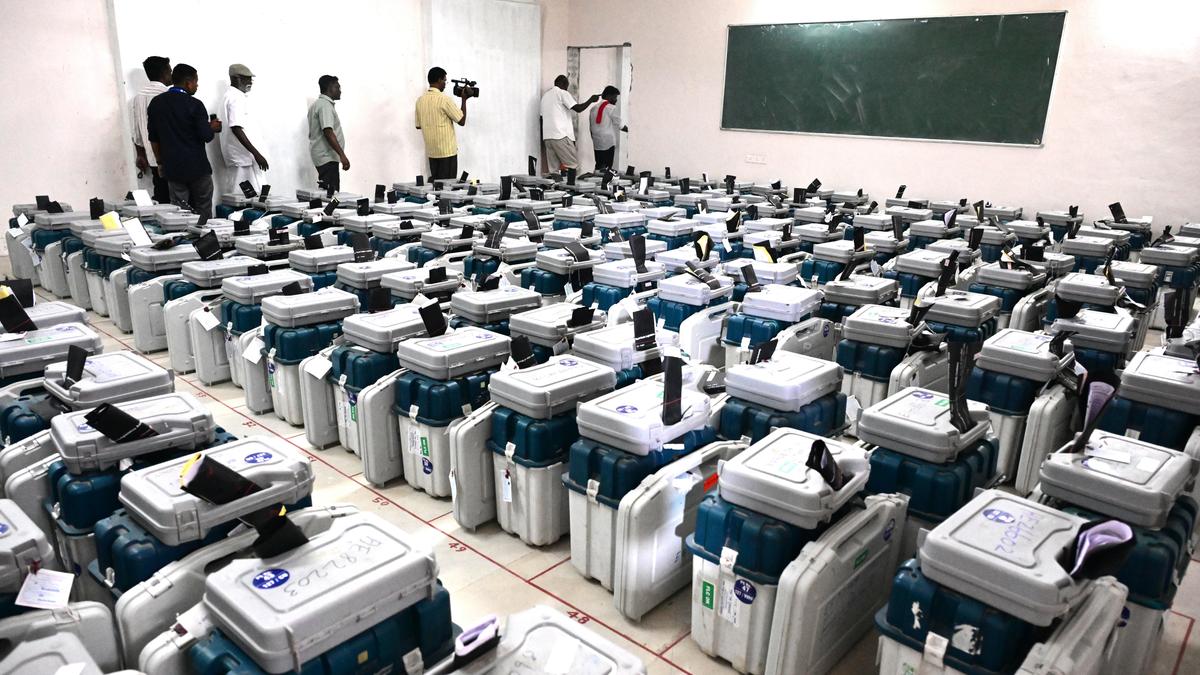
The Election Commission has successfully concluded a comprehensive post-poll scrutiny across Tamil Nadu and West Bengal, confirming that no re-polling will be necessary. This extensive verification exercise took place on April 24, covering all 152 Assembly constituencies in West Bengal and 234 in Tamil Nadu. The process involved a rigorous examination of documentation and electronic voting records to ensure the integrity of the democratic process following the high-stakes voting rounds in these critical Indian states.
To maintain maximum transparency, the scrutiny was conducted in the presence of general observers and official representatives from the competing political parties. Officials meticulously cross-referenced the entries in the presiding officers' diaries with the register of voters and other essential polling station records. This collaborative oversight is a standard safeguard in the Indian electoral framework, designed to address any potential discrepancies or irregularities reported on the day of balloting before the final counting of votes begins.
The decision to forgo re-polls suggests that the administrative challenges and localized incidents of friction reported during the voting phases did not reach a threshold that compromised overall electoral validity. In Tamil Nadu, the exercise spanned a vast geographical area, while in West Bengal, the process focused on ensuring stability amidst a particularly competitive political landscape. Candidate representatives were given the opportunity to raise specific objections during the review, all of which were evaluated by the Commission's designated neutral observers.
With the verification phase now complete, the focus shifts toward the secure storage of electronic voting machines and the upcoming counting process. The absence of re-poll orders provides a sense of finality to the polling phase in these regions, allowing security forces and electoral staff to streamline their post-election logistics. As India moves further into its multi-phase electoral calendar, the successful conclusion of this scrutiny reinforces the procedural resilience of the world's largest democratic exercise under intense public scrutiny.